
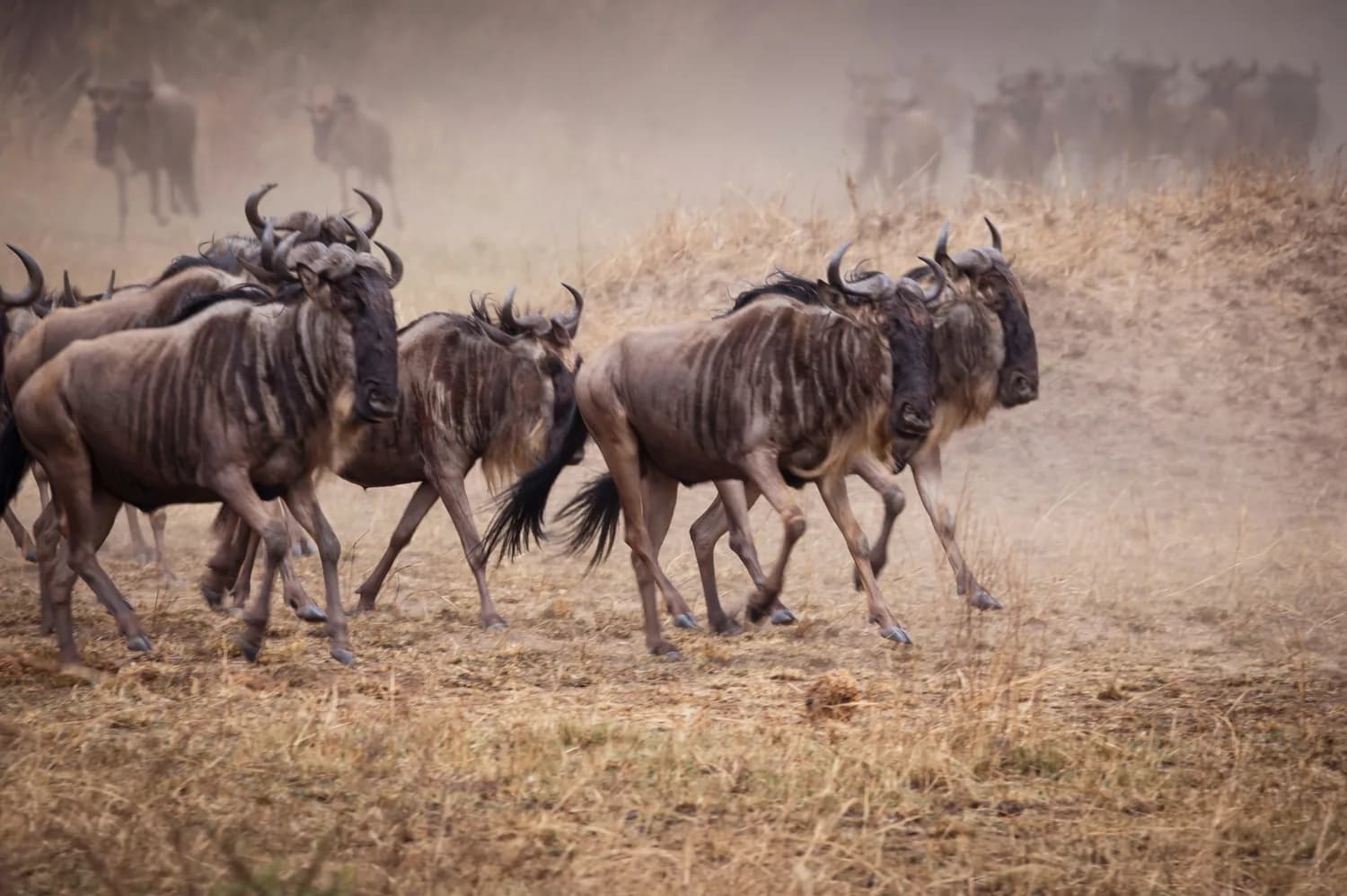
The herds follow water and grazing
Migration movements respond to rainfall and fresh grass. A calendar helps identify likely areas, but it cannot predict a particular crossing or guarantee where a herd will be on your travel dates.
January–March: the southern plains
Southern Serengeti and the Ndutu area are a usual focus during the calving period. Select accommodation for the broader area you want to explore; exact herd positions and the timing of births vary.
April–June: northward movement
As conditions change, central and western areas may become relevant to the route. The herds do not move as one fixed group. Allow enough time to explore from a base chosen for your dates.
July–October: the northern Serengeti
The Mara River region is often the focus for migration activity. Crossings are unpredictable and waiting is part of the experience. Never choose a trip on the promise that a crossing will happen.
November–December: returning south
The broader cycle turns south as rainfall brings fresh grazing. Route decisions should respond to the season rather than rely only on a printed map.
Give the route enough time
Northern Serengeti is not a short extension from Ngorongoro. A flight-based connection or extra overland days can make the journey more comfortable. Tell us whether your priority is migration, varied habitats, photography or simply time on safari.
Travel requirements and local conditions can change. Reconfirm the details relevant to your journey before departure.